Topic outline
- GeneralForum: 1Text and media areas: 2General
📢 Please complete the following tasks during the first week:
- Read the Course Description and Course Syllabus.
- Review the Course Learning Outcomes (CLOs), assessment criteria, and weekly learning schedule.
- Complete the Self-Introduction Forum so that we can get to know each other and build a collaborative learning community.
- Explore the learning resources provided in Week 1 before attending class.

- Course Structure and ScheduleCourse Structure and ScheduleText and media area: 1Folder: 1Course Structure and Schedule
Course outline
- Teaching Methods
- Evaluation Criteria & Grading Scale
- Evaluation and Study TipsEvaluation and Study TipsText and media area: 1Evaluation and Study Tips

1. Stay Engaged Every Week
Participate actively in discussions, both in class and online (if applicable). Your voice and ideas matter.
2. Collaborate Effectively
Communication and coordination are essential in group projects. Take initiative and contribute meaningfully to your team.
3. Apply Theory to Practice
Use real-world examples when writing reflections or designing your innovation proposal. This shows depth of understanding.
4. Read Widely and Critically
Go beyond assigned readings. Stay updated with current trends in educational technology and innovation. Bring insights into class discussions.
5. Manage Your Time
Plan your work across the 16 weeks. Start your final paper early and schedule check-ins with your instructor for feedback.
6. Be Creative and Reflective
This course values originality. Don’t be afraid to suggest bold ideas—just support them with evidence and clear reasoning.
7. Ask for Support
If you’re unsure about any task or concept, don’t hesitate to ask questions or request clarification. Your success is a shared goal.
- Self-Introduction Task
- Week 1: Introduction: Concepts and Importance of Innovation and Technology in EducationWeek 1: Introduction: Concepts and Importance of Innovation and Technology in EducationText and media area: 1Assignment: 1Folder: 1File: 1Week 1: Introduction: Concepts and Importance of Innovation and Technology in Education
- Opened: Saturday, 21 June 2025, 12:00 AMDue: Saturday, 28 June 2025, 1:00 PM
- Week 2: Technological Revolution and Its Impact on EducationWeek 2: Technological Revolution and Its Impact on EducationText and media areas: 4Folder: 1Quiz: 1Week 2: Technological Revolution and Its Impact on Education

1. The Fourth Industrial Revolution and Education
The Fourth Industrial Revolution (4IR), characterized by the fusion of technologies across physical, digital, and biological spheres, is transforming industries—and education is no exception. Unlike previous industrial revolutions that focused on mechanization, electricity, or digitization, 4IR emphasizes interconnected systems, automation, and real-time data.
In the educational context, 4IR pushes institutions to redesign curriculum, pedagogy, and school administration to prepare learners for future challenges. Skills such as critical thinking, creativity, digital literacy, and adaptability become essential. Educational leaders must thus develop strategic plans to incorporate technologies like robotics, IoT (Internet of Things), and AI into learning environments to align with workforce demands (Schwab, 2017; World Economic Forum, 2020).
2. Digital Technology and Changes in Teaching and Learning Models
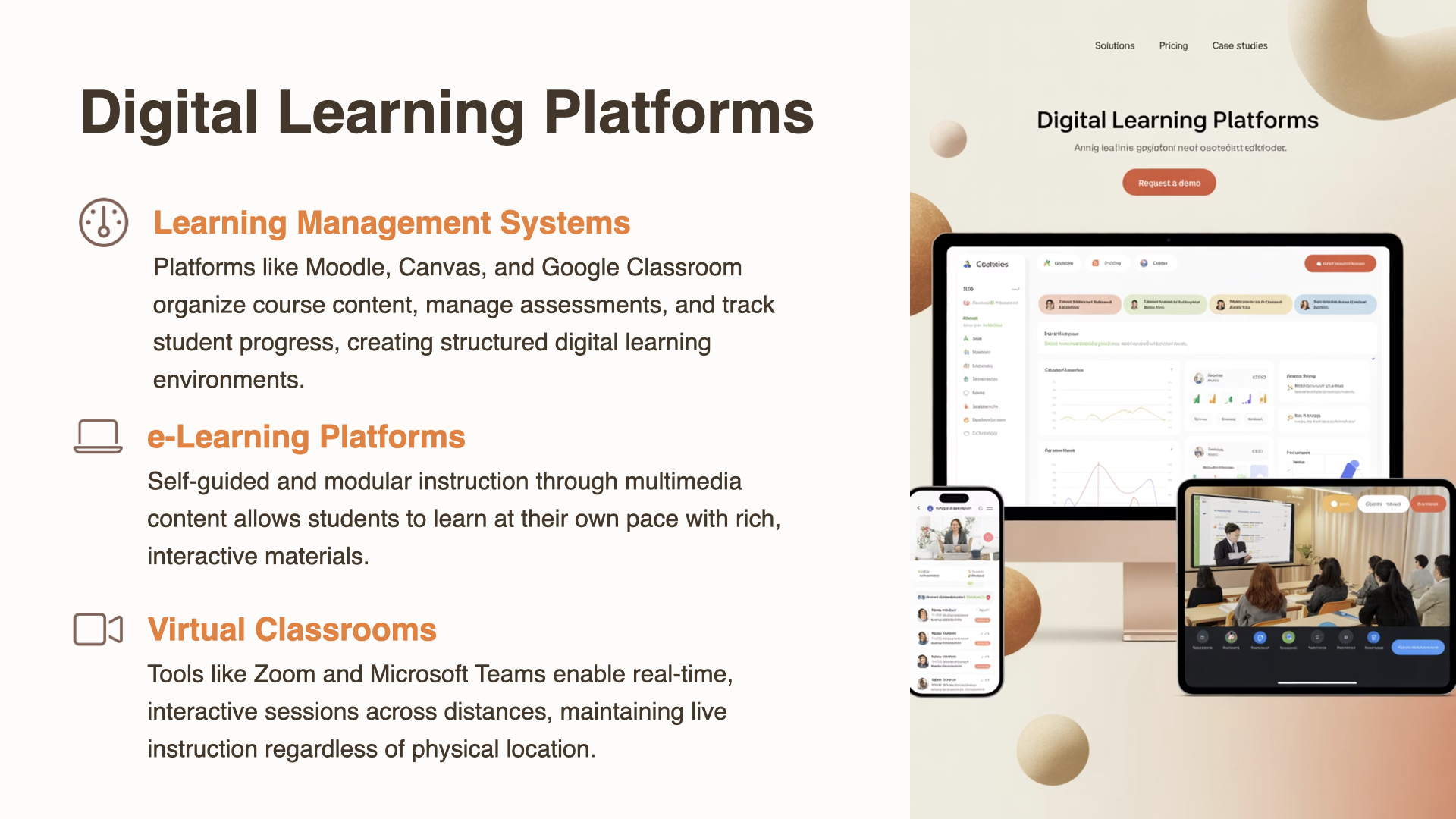
The integration of digital technology has disrupted traditional education systems and opened pathways for more inclusive, flexible, and personalized learning. Models such as blended learning, flipped classrooms, and virtual learning environments allow for greater student engagement, self-directed learning, and the use of multimedia resources.
Instructors are shifting roles from knowledge transmitters to learning facilitators, while students engage in active learning through digital platforms, simulations, and collaborative tools like Google Workspace or Microsoft Teams. These changes promote constructivist and connectivist learning approaches, where knowledge is co-created and contextualized (Redecker, 2017; Anderson & Dron, 2011).
3. Artificial Intelligence (AI) and Its Applications in Education
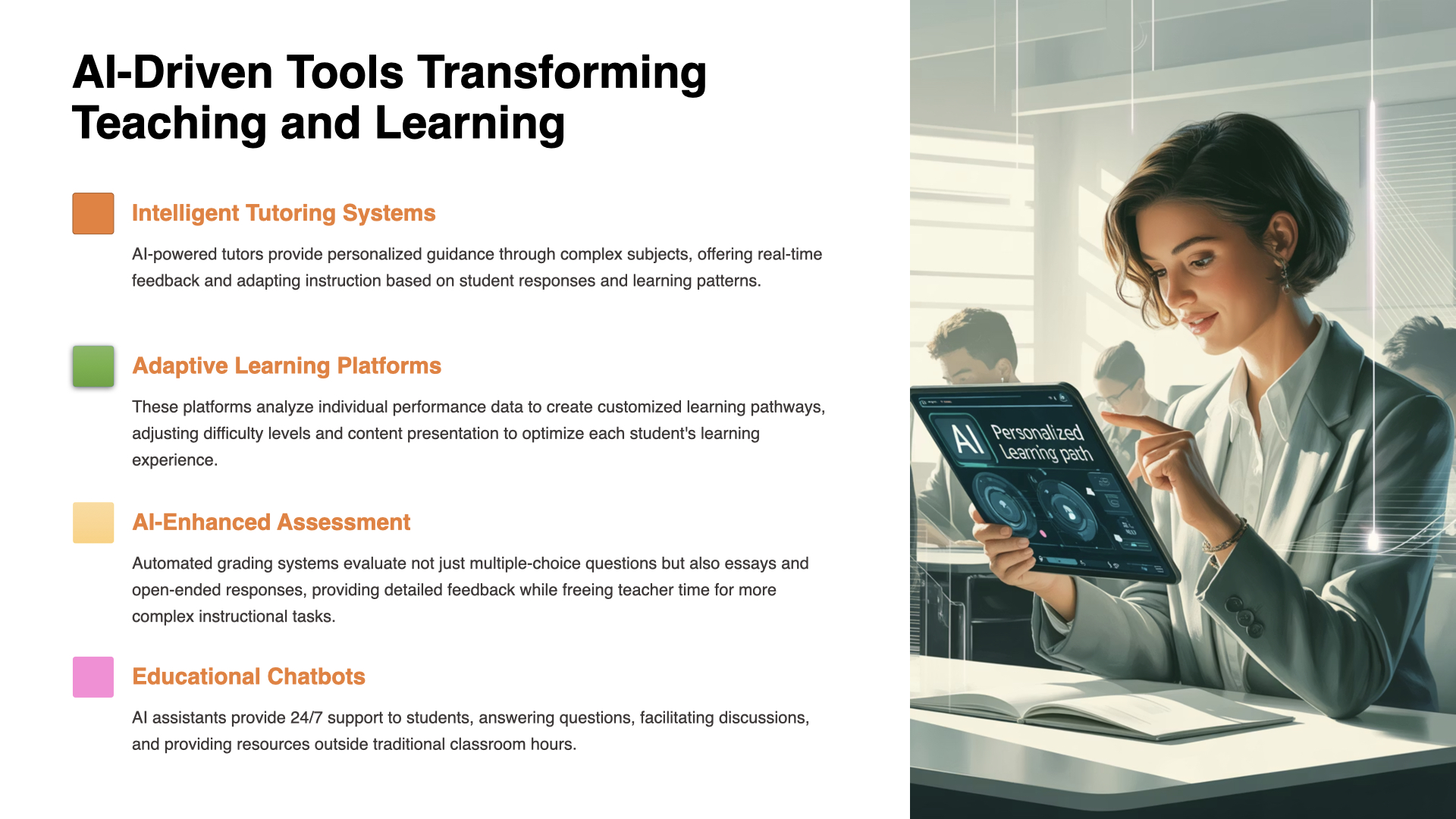
AI technologies are becoming central to transforming education systems. In administration, AI is used for predictive analytics, automated grading, and optimizing resource allocation. In the classroom, intelligent tutoring systems, AI-driven learning analytics, and adaptive learning platforms like Knewton or Squirrel AI tailor educational content to individual students’ needs and learning paces.
Additionally, AI chatbots serve as virtual assistants for both students and teachers, offering real-time support and reducing administrative workload. As a result, educational institutions can deliver more personalized, efficient, and data-informed education while improving operational effectiveness (Luckin et al., 2016; Holmes et al., 2019).
- Opened: Sunday, 29 June 2025, 5:20 PM

Assignment for next week
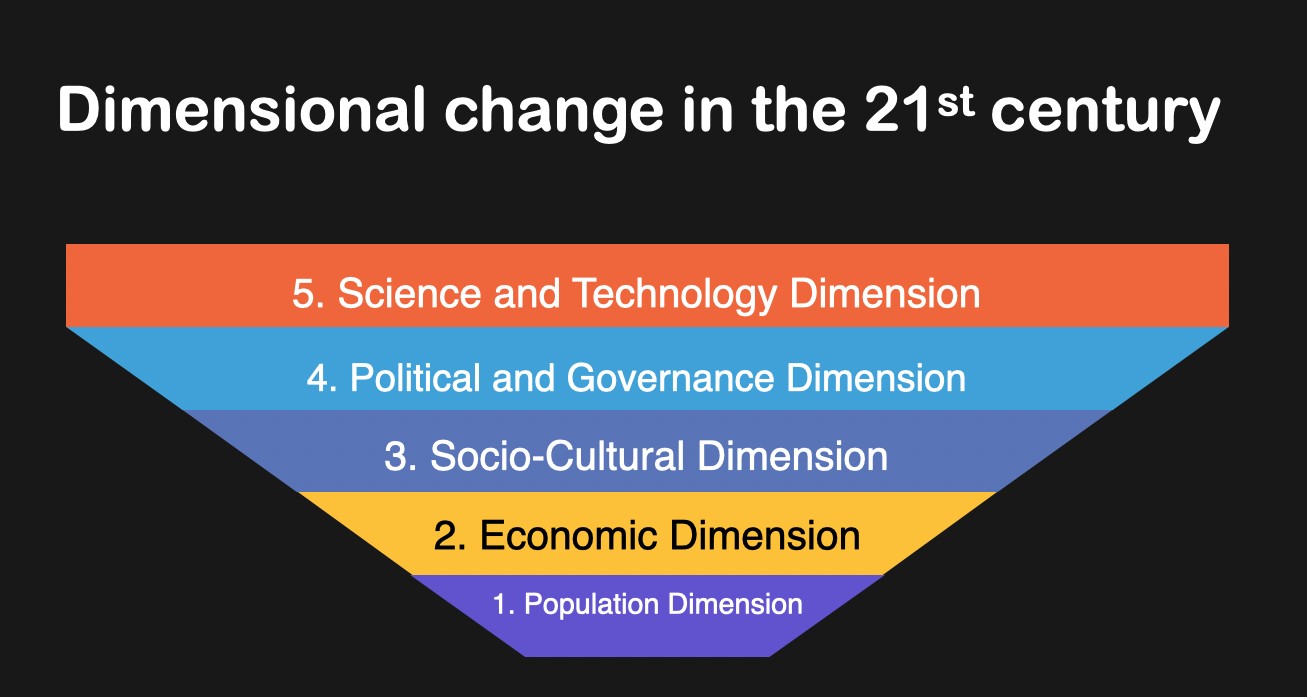
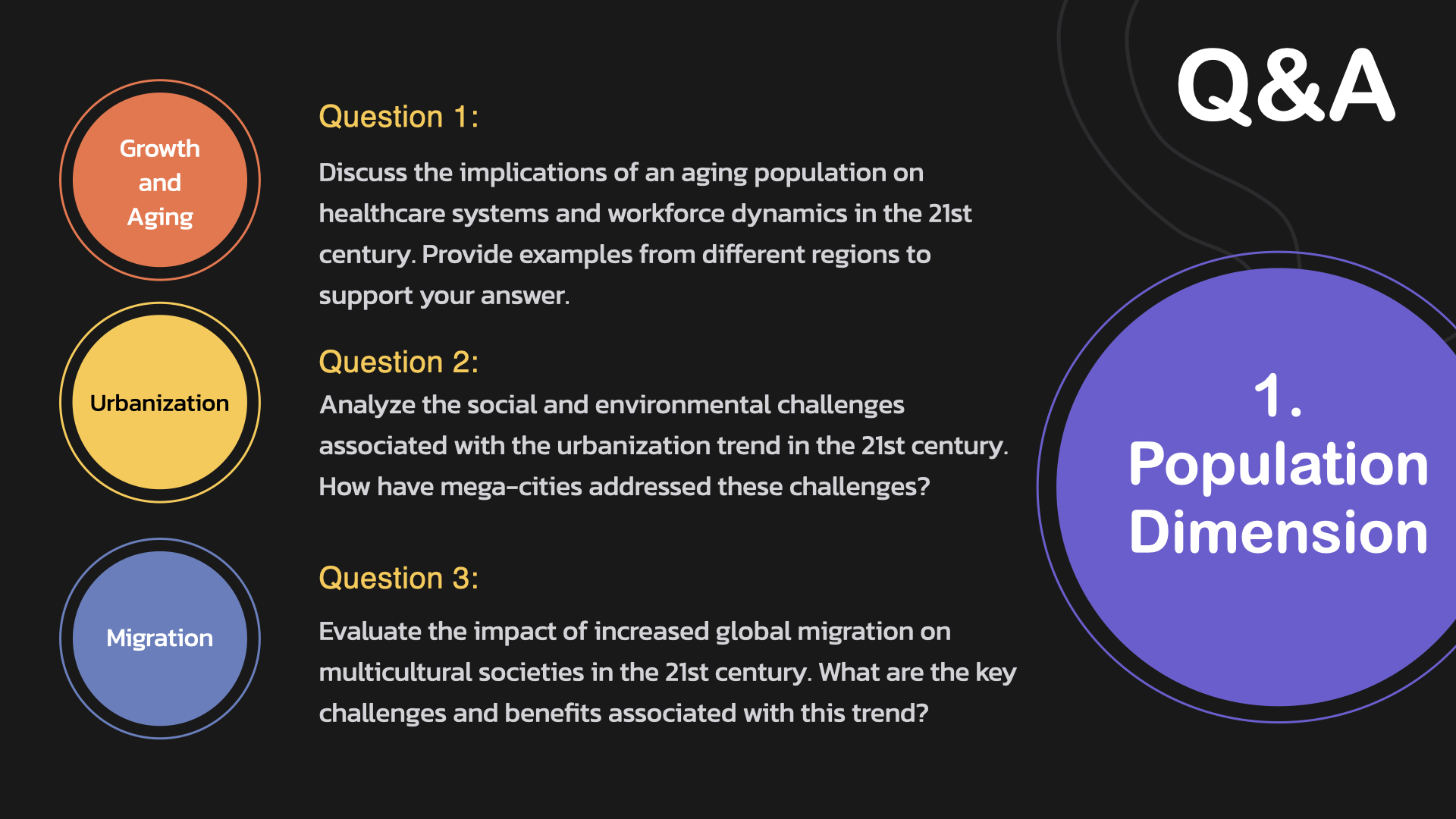
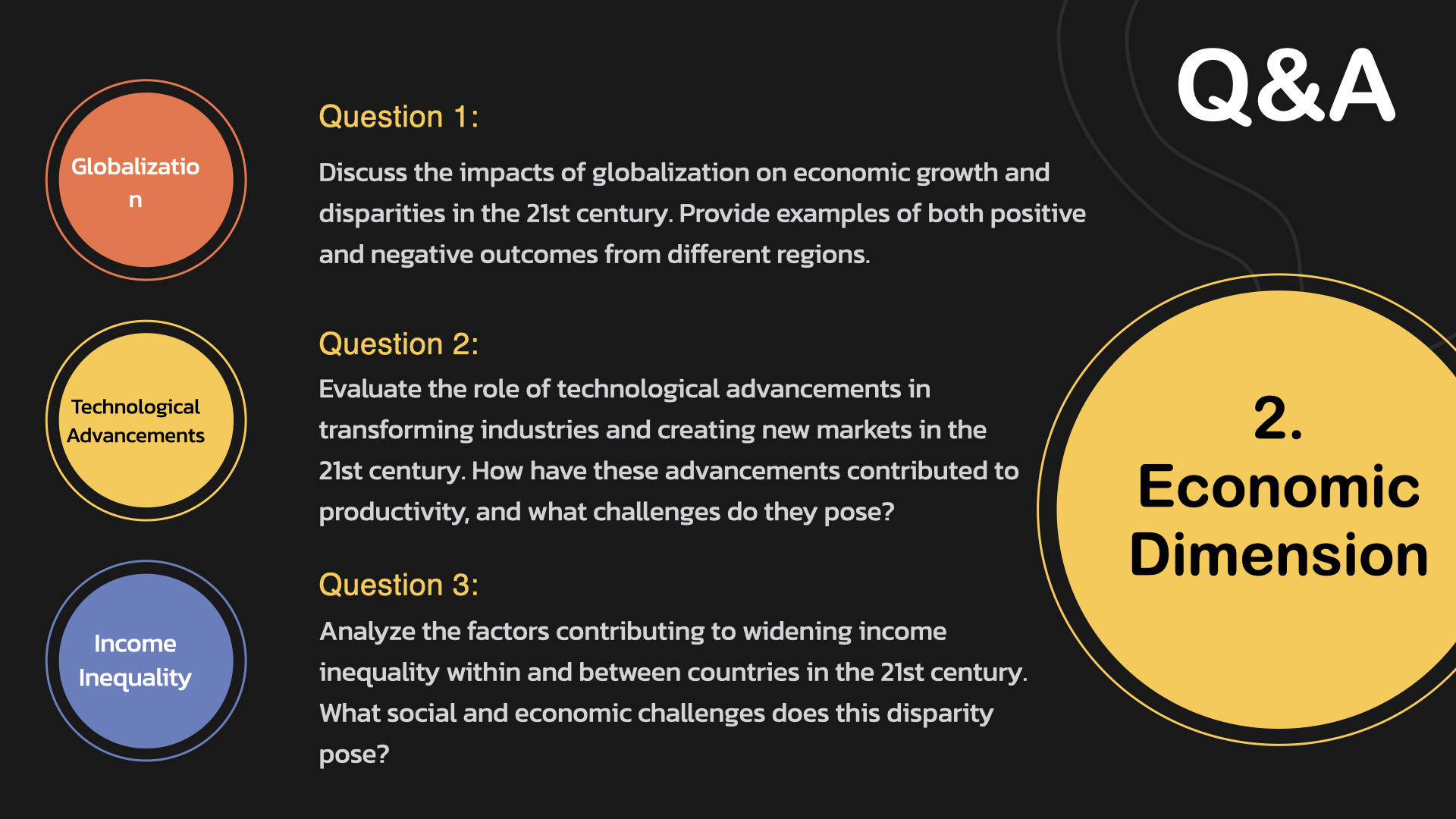
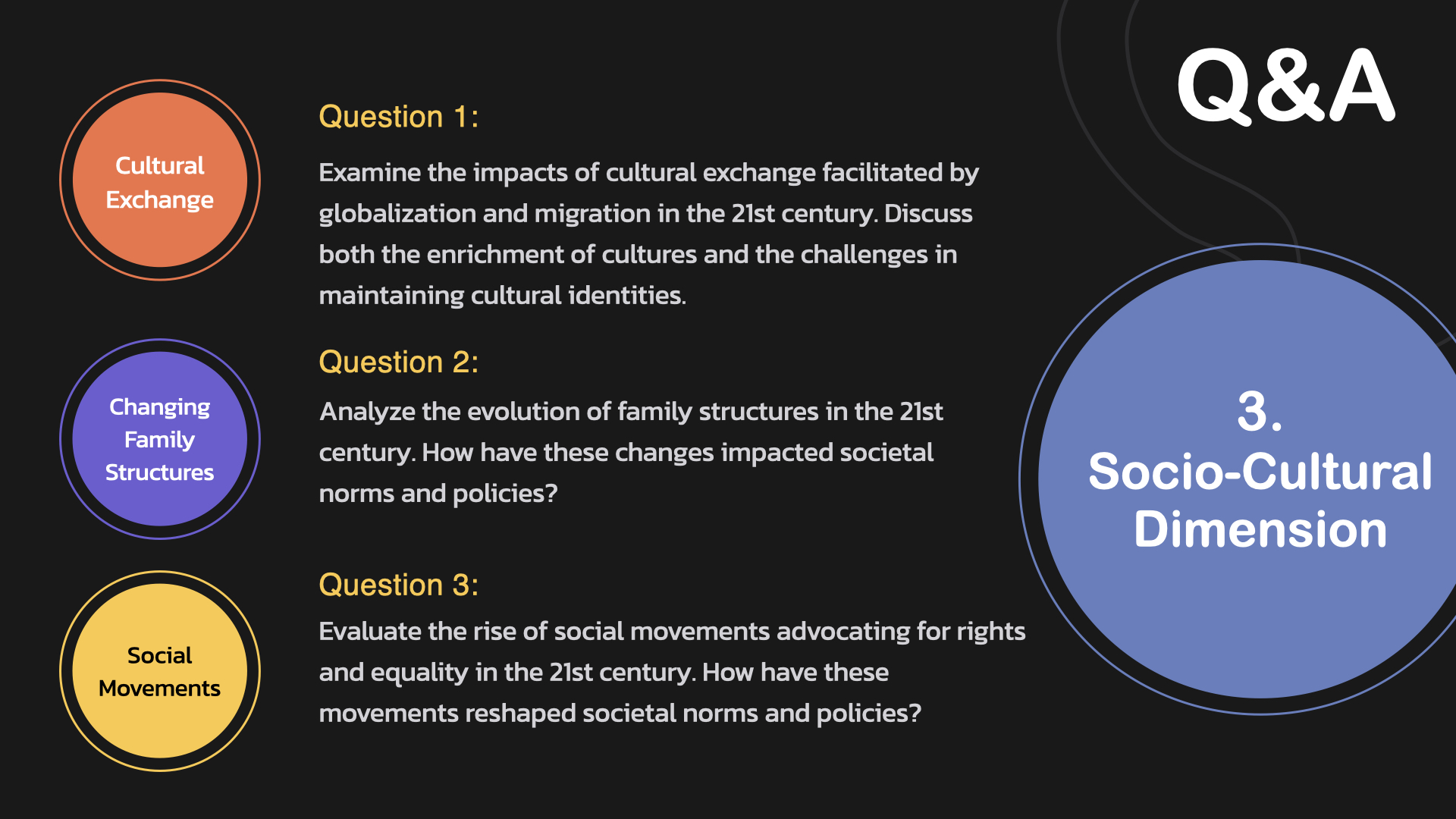
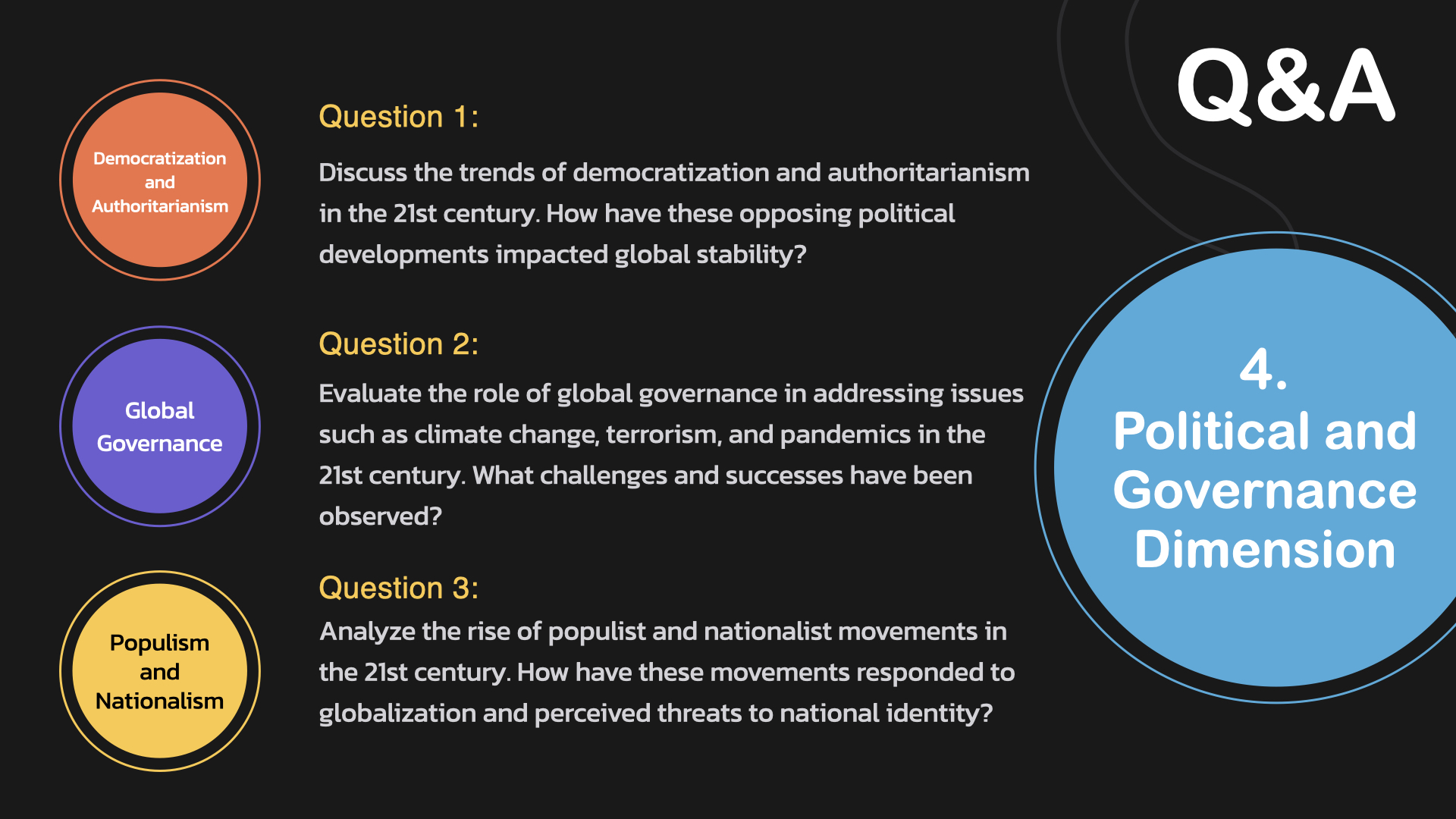
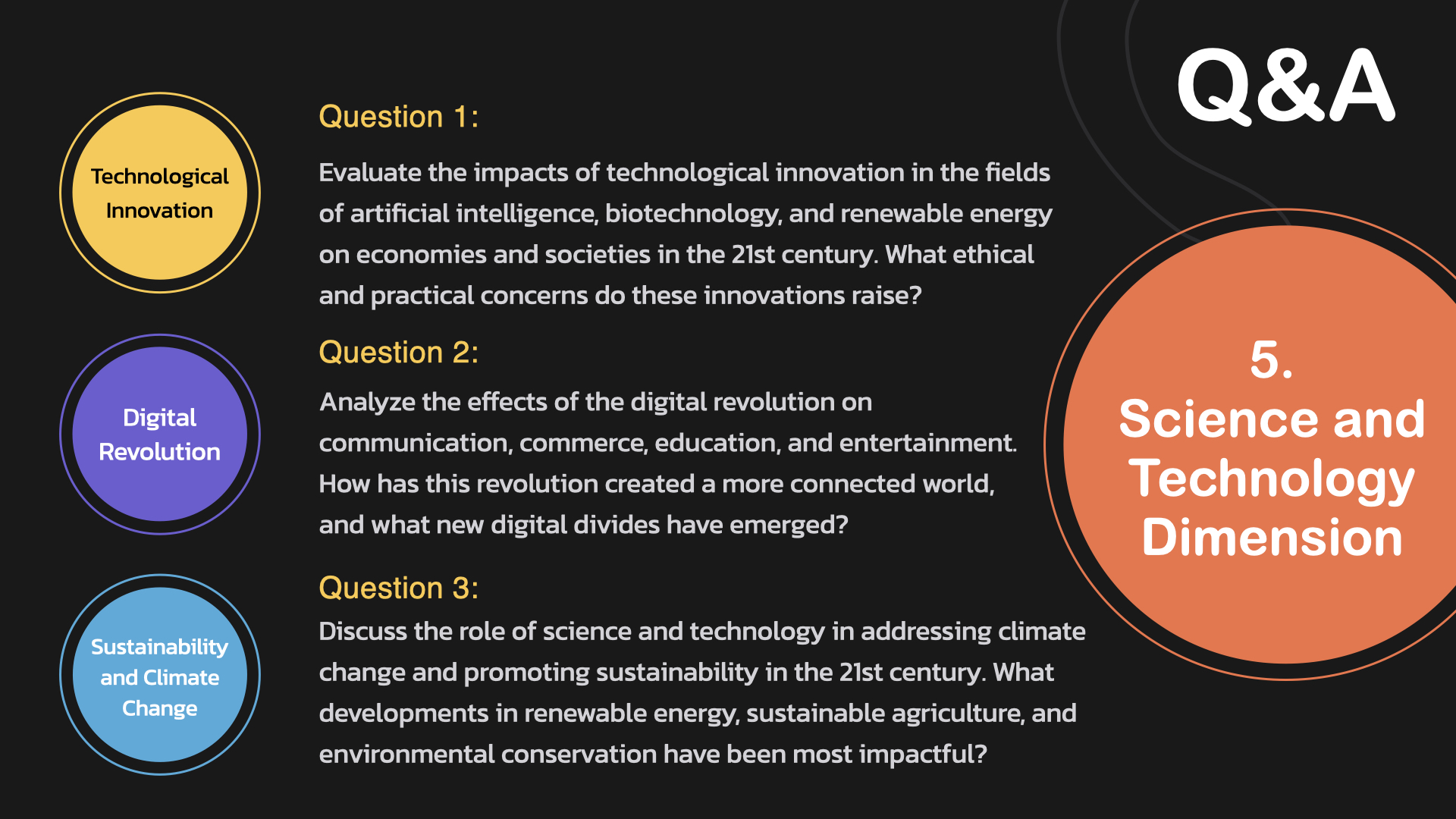
Please study the content related to the five dimensions of change in the 21st century as shown in the image. These dimensions include: Population, Economic, Socio-Cultural, Political and Governance, and Science and Technology. Once you’ve reviewed the information, we will have a discussion and group reflection in our next class session next week. Be prepared to share your insights and how these dimensions affect education and society.
- Week 3: Dimensional Change in The 21st CenturyWeek 3: Dimensional Change in The 21st CenturyText and media areas: 14Forums: 5Folder: 1Week 3: Dimensional Change in The 21st Century
Dimensional Change in The 21st Century

The 21st century has witnessed transformative changes across multiple dimensions that have significantly impacted global societies. Here's a dimension:

Each of these dimensions interconnects and influences the others, shaping the 21st-century world in complex ways. Addressing the challenges and opportunities they present requires integrated and innovative approaches across all sectors of society.
- Week 4: Education and Administration of Education in the Context of ChangeWeek 4: Education and Administration of Education in the Context of ChangeText and media areas: 8Forums: 5Folder: 1Week 4: Education and Administration of Education in the Context of Change

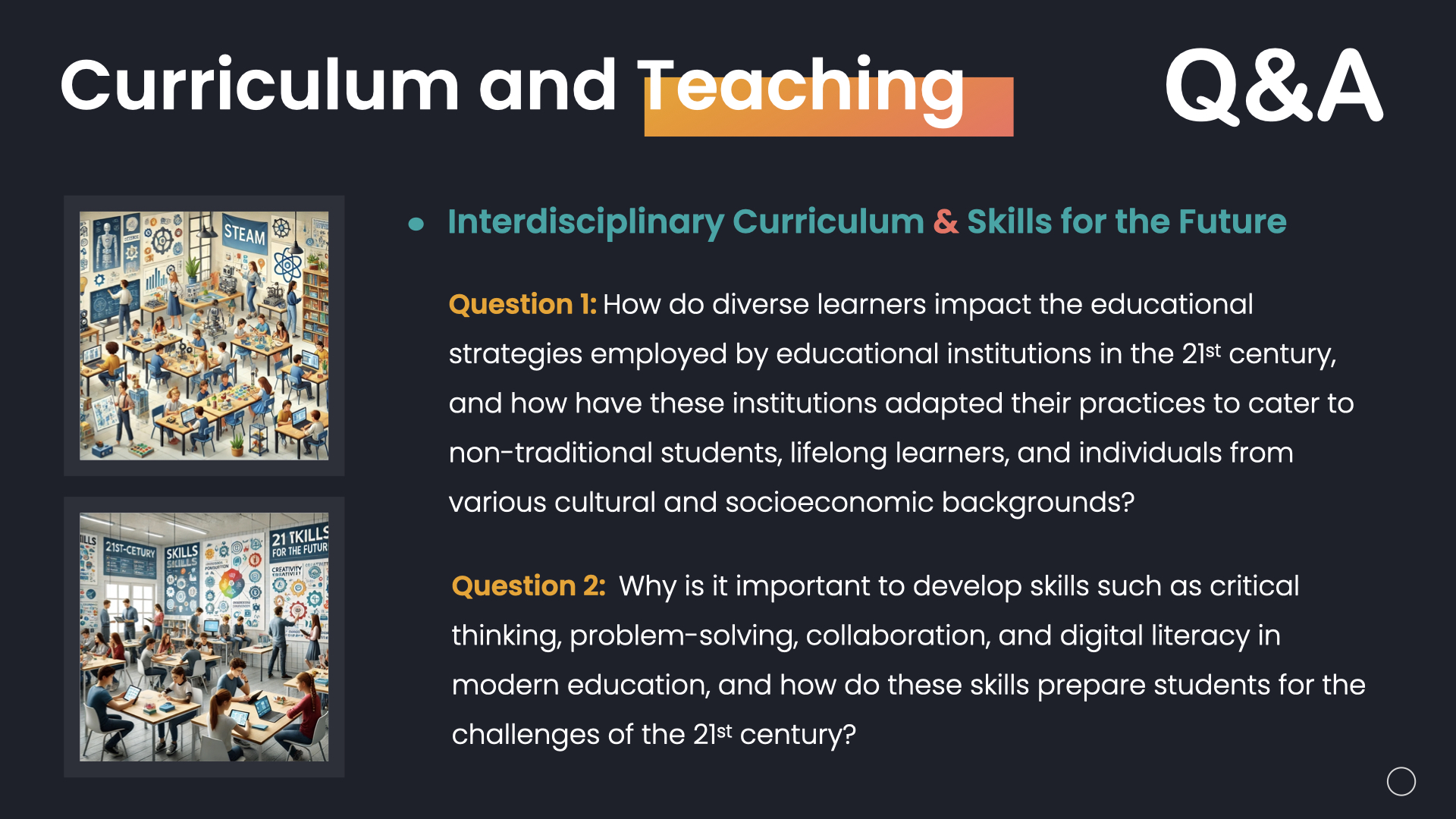
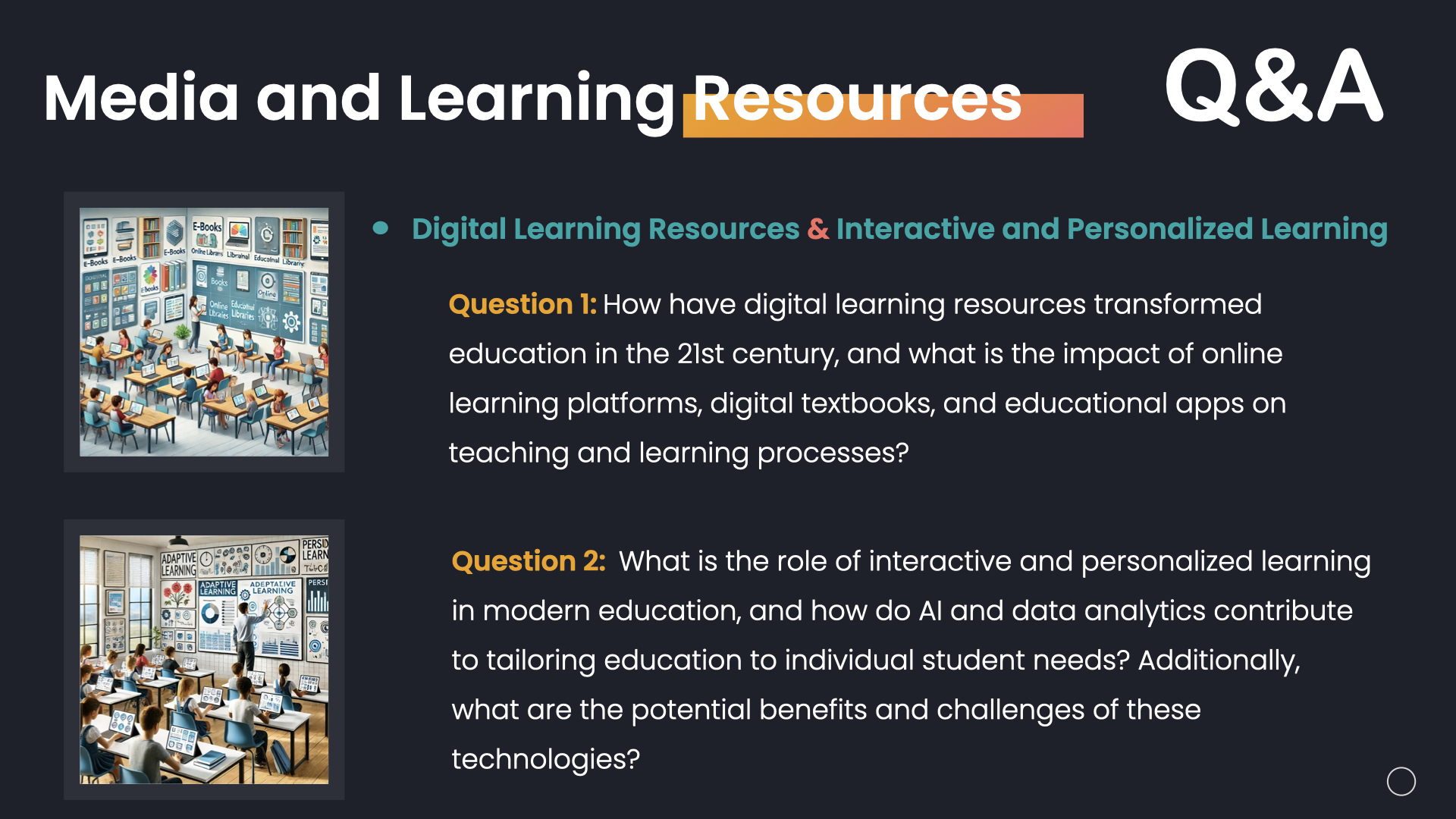
The administration of education has changed in the 21st century to meet the changing demands of a globalized society. The target audience now includes diverse, tech-savvy learners. Curricula and teaching methods are becoming more flexible and innovative, integrating technology to enhance learning experiences. Media and learning resources are increasingly digital and interactive, providing access to vast amounts of information. Assessment methods have shifted to more formative, continuous evaluations, emphasizing skills and competencies. Effective educational management now demands agility, inclusivity, and data-driven decision-making to foster an adaptive learning environment. Here is an explanation of key aspects of the transformation in education and the administration of education in the 21st century.
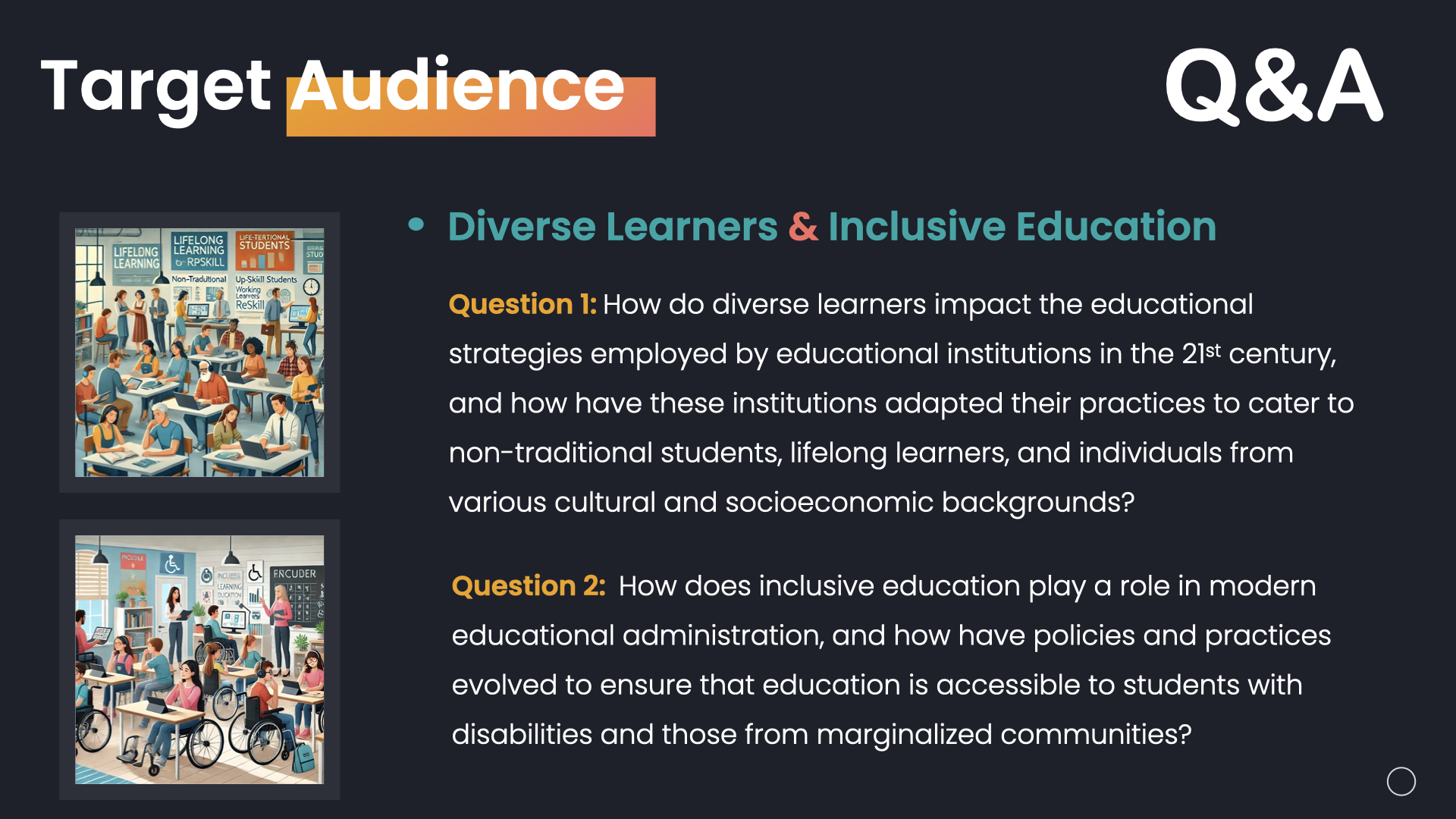
1. Target AudienceThe target audience for education in the 21st century has expanded and diversified significantly, reflecting changes in demographics, societal needs, and educational goals. Here's a more detailed look at this dimension:
Diverse LearnersKey Points:
- Non-Traditional Students: Education now caters to non-traditional students, including adult learners, working professionals, and individuals seeking to reskill or upskill. This demographic often requires flexible learning options, such as evening classes, online courses, and part-time programs.
- Lifelong Learners: There's an increasing emphasis on lifelong learning, encouraging individuals to acquire new knowledge and skills throughout their lives continually. This shift recognizes the rapid pace of technological and societal change that demands ongoing education and training.
Inclusive EducationKey Points:
- Students with Disabilities: Modern education systems aim to be inclusive of students with disabilities, ensuring accessibility through assistive technologies, personalized learning plans, and supportive classroom environments.
- Marginalized Communities: Efforts are being made to include students from marginalized communities, such as ethnic minorities, indigenous populations, and those from low-income families, by providing equitable access to quality education and addressing barriers to participation.
Academic Articles

There are some academic articles related to the topics of target groups, curriculum and teaching, learning media, assessment, and educational management.
Curriculum and Assessment
- Title: "Aligning the Curriculum to Promote Learning"
- Authors: Biggs, J., & Tang, C.
- Year: 2012
- Source: Published in the Encyclopedia of the Sciences of Learning, Springer. This article discusses how to design a curriculum that aligns with educational goals to enhance learning outcomes, emphasizing constructive alignment to bridge teaching, learning, and assessment.
Teaching and Learning Assessment
- Title: "Alignment analysis of teaching–learning-assessment within the classroom: how teachers implement project-based learning under the curriculum standards"
- Authors: Guo et al.
- Year: 2020
- Source: Published in Disciplinary and Interdisciplinary Science Education Research. This study examines project-based learning and its alignment with curriculum standards to improve teaching methods and student engagement, highlighting the connection between learning outcomes and assessment strategies.
Educational Management and Target Groups
- Title: "On Current and Critical Issues in Curriculum, Learning and Assessment"
- Authors: Reimers and Schleicher
- Year: 2020
- Source: Global Citizenship Education Clearinghouse. This article addresses the fragmentation in educational systems and discusses strategies for integrating knowledge to better address the diverse needs of target groups in education, focusing on holistic educational management.
Formative Assessment in Educational Settings
- Title: "The Role of Assessment in a Learning Culture"
- Authors: Nicol, D.
- Year: 2004
- Source: Published in Educational Researcher. Nicol's work focuses on formative assessment practices that empower students as self-regulated learners and examines the role of feedback in influencing student motivation and learning.
- Week 5: Digital Innovation and Technology and Educational ManagementWeek 5: Digital Innovation and Technology and Educational ManagementText and media areas: 2Assignment: 1Week 5: Digital Innovation and Technology and Educational Management

- Opened: Wednesday, 25 June 2025, 12:00 AM
Objective:

This activity aims to encourage students to explore and share examples of how digital technology fosters innovation in educational institutions. This will help deepen their understanding of the role technology plays in transforming educational management and practices.
Activity instructions:
1. Form small groups (5 minutes):
◦ You will work in small groups of 3-4 students.◦ Each group should select one person to take notes and one person to present the group’s ideas at the end of the session.2. Brainstorm (15 minutes):
◦ As a group, brainstorm examples of how digital technology has driven innovation in your educational experiences or in educational institutions you are familiar with.◦ Consider different areas such as:- Administrative tasks: for example, automation of grading or attendance tracking.- Teaching and learning: For example, use of learning management systems (LMS) like Google Classroom or Moodle.- Communication and collaboration: For example, video conferencing tools for remote learning or digital platforms for teacher-student communication.- Data-driven decision-making: For example, the use of data analytics to personalize learning or improve school management.◦ Try to identify at least 3 specific examples of digital technology that are innovative in the way they improve educational management or learning. 3. Discuss and analyze (10 minutes):◦ Discuss how these digital technologies have transformed educational practices or solved problems in your institutions.◦ Reflect on what makes these examples innovative. Are they improving efficiency? Enhancing learning experiences? Enabling better decision-making?4. Present (5 minutes):
◦ After brainstorming and discussing, one member from each group will present the key examples you have identified.◦ Each presentation should be concise (about 1-2 minutes) and focus on the most impactful ways digital technology is driving innovation in education.Delivery:• Brief presentations by each group summarizing their brainstorming results• Your group should be prepared to answer follow-up questions from instructors or classmates.
- Week 6: Characteristics of Innovation and Digital Technology in the 21st CenturyWeek 6: Characteristics of Innovation and Digital Technology in the 21st CenturyText and media area: 1Assignment: 1Week 6: Characteristics of Innovation and Digital Technology in the 21st Century

Characteristics of Innovation and Digital Technology in the 21st Century
Key Characteristics of 21st-Century Innovations
1. Adaptability:
In the 21st century, innovation in education must be adaptable, allowing for flexibility across various learning environments, whether traditional classrooms, blended learning models, or fully online platforms. Adaptable innovations can meet the diverse needs of students and institutions by providing options for personalization and differentiation. For instance, adaptive learning technologies adjust content delivery based on the learner’s pace and performance, creating a more individualized experience (Means et al., 2010).
2. Scalability:
Scalable innovations can be expanded and applied to small and large educational institutions without losing their effectiveness. Scalability is crucial because it ensures that an innovation’s benefits can be shared across different schools, districts, or even countries. For example, learning management systems (LMS) like Moodle or Canvas can accommodate thousands of students or be tailored to small classes, making them highly scalable solutions (Zawacki-Richter et al., 2019).
3. Sustainability:
Sustainable innovations are those that can be maintained over the long term without placing excessive demands on financial, human, or technical resources. Sustainability ensures that innovations remain viable and relevant, particularly in resource-constrained environments. One example is the use of open-source software in education, which reduces costs and allows for community-driven improvements, making it a more sustainable option for institutions worldwide (Anderson, 2019).
4. Interactivity and Collaboration:
In an increasingly digital world, interactivity and collaboration are key features of 21st-century innovations. Technologies such as Google Workspace and Microsoft Teams enable real-time collaboration between students, teachers, and administrators, fostering communication and teamwork. These platforms support synchronous and asynchronous learning and provide tools for sharing documents, working on group projects, and engaging in discussions, making them integral to modern education (Johnson et al., 2015).
Examples of Cutting-Edge Innovations1. AI-Driven Student Assessment Tools:
Artificial intelligence (AI) is increasingly used to assess student performance in more accurate and data-driven ways. Tools like AI-powered grading systems can evaluate students' written work and provide immediate feedback, helping educators save time and focus on more personalized teaching. Furthermore, AI tools analyze data to identify students who may need additional support, enabling timely interventions (Li & Chen, 2020).
2. Virtual Reality (VR) for Immersive Learning:
Virtual reality is transforming learning by offering immersive experiences that go beyond traditional classroom boundaries. For instance, VR allows students to explore historical sites virtually, conduct science experiments in simulated labs, or practice medical procedures in a risk-free environment. VR enhances engagement and provides experiential learning opportunities, particularly in fields such as science, history, and vocational training (Radianti et al., 2020).
3. Smart Classroom Systems:
Smart classrooms integrate various technologies, such as interactive whiteboards, IoT devices, and adaptive learning platforms, to create a seamless, tech-enhanced learning environment. These systems can automatically adjust lighting, temperature, and digital displays based on classroom conditions and usage patterns. Moreover, they provide real-time data on student engagement and performance, allowing teachers to make data-driven decisions to improve instruction (Kumar et al., 2018).
- Opened: Wednesday, 25 September 2024, 12:00 AM
Objective:

The purpose of this activity is to analyze real-world examples of schools or universities that successfully implemented innovative technology solutions to address 21st-century educational challenges. By examining these case studies, you will gain insights into the strategies and technologies used to adapt to the modern educational landscape.
Activity instructions:1. Form Groups (5 minutes):
- Organize yourselves into small groups of 4-5 students.
- Select one person as the group leader to guide the discussion and another as the presenter to share the group's findings with the class.
2. Case Study Selection (5 minutes):
- Each group will be assigned a specific case study that focuses on a school or university that has successfully integrated innovative technology to tackle 21st-century educational challenges. Examples of case studies may include:
- A university that adopted AI-driven learning platforms to personalize student experiences.
- A school district that implemented smart classrooms and IoT devices for real-time data analysis.
- An institution that used cloud-based tools to manage resources and ensure continuity in remote or hybrid learning.
3. Analyze the Case Study (20 minutes):
- In your group, read and analyze the assigned case study, focusing on the following points:
- The problem: What specific educational challenges did the institution face? Consider issues such as administrative inefficiency, student engagement, or lack of access to educational resources.
- The technology solution: What innovative technology was implemented? Identify the key digital tools or platforms used, such as AI, cloud computing, or data analytics.
- Implementation strategy: How did the institution adopt the technology? Discuss any strategies used to ensure successful integration, such as professional development, stakeholder engagement, or phased rollouts.
- The impact: What were the results or benefits of the innovation? Analyze the impact on student learning, administrative processes, or resource management.
- Lessons learned: What challenges did the institution face during implementation, and what strategies helped overcome those challenges?
4. Group Discussion (10 minutes):
- Discuss within your group the broader implications of the case study. Consider questions like:
- How can similar technologies be applied in your educational environment?
- What factors were critical to the success of the implementation, and how can they be replicated?
5. Present Findings (10 minutes):
- Each group’s presenter will summarize the key points from the case study for the class.
- Focus on the problem, the technology solution, the implementation strategy, and the outcomes.
- Keep your presentation to 3–4 minutes, then leave 1-2 minutes for questions from the class or instructor.
Deliverables:
- A brief group presentation summarizing your analysis of the case study and the lessons learned.
- Week 7: Driving Education and Educational Management with Innovation and Digital Technology Week 7: Driving Education and Educational Management with Innovation and Digital TechnologyText and media areas: 2Assignment: 1Week 7: Driving Education and Educational Management with Innovation and Digital Technology

Driving Education and Educational Management with Innovation and Digital Technology
Transformative Learning and Technology
Jack Mezirow developed transformative learning, a theory that emphasizes the process by which individuals critically reflect on their experiences, leading to a fundamental shift in their worldview and understanding (Mezirow, 1991). In an educational context, transformative learning facilitates deeper engagement and meaningful change in students' perspectives, encouraging them to become active participants in their learning journey.Definition and Relationship with Digital Innovation in Education
The relationship between transformative learning and digital innovation lies in how technology can enhance this learning process. Digital tools can provide opportunities for critical reflection, collaboration, and exploration of diverse viewpoints. For instance, online discussion forums and collaborative platforms enable students to engage with peers and educators from varied backgrounds, fostering a more inclusive and expansive learning environment.
Innovative Technologies Driving Change
Innovative technologies are revolutionizing education by offering new methodologies for teaching, managing, and engaging students:
1. Flipped Classrooms: This model reverses traditional teaching methods by delivering instructional content online outside of class and using class time for active learning activities. This approach encourages deeper understanding and application of knowledge as students come prepared to engage in discussions and problem-solving.
2. Massive Open Online Courses (MOOCs): MOOCs provide accessible education to a global audience, allowing learners to access high-quality courses from prestigious institutions. This democratization of learning promotes lifelong learning and flexibility in educational pathways.3. Adaptive Learning Technologies: These tools utilize algorithms to tailor educational content to individual students’ needs, helping to optimize their learning experiences. By analyzing performance data, adaptive learning systems adjust the pace and level of content delivery, ensuring that each student receives a personalized educational experience.
Examples of Transformative Digital TechnologiesStrategies for Implementing Innovation1. Artificial Intelligence (AI): AI enhances educational experiences by personalizing learning pathways and providing data-driven insights for administrative decision-making. For instance, intelligent tutoring systems can assess student progress and recommend resources tailored to individual learning needs (Luckin et al., 2016).
2. Virtual and Augmented Reality (VR/AR): VR and AR create immersive learning environments, transforming subjects like science and history into interactive experiences. Students can explore virtual ecosystems or historical events, facilitating experiential learning that enhances understanding and retention.
3. Big Data Analytics: Big data enables educational institutions to analyze vast amounts of data to inform decision-making processes. By monitoring student performance trends and resource allocation, schools can implement targeted interventions to improve educational outcomes (Siemens, 2013).To successfully implement innovative technologies in education, administrators can adopt the following strategies:
1. Promoting a culture of innovation: Administrators should foster an environment that encourages creativity and experimentation. This can be achieved through professional development opportunities, where faculty are trained to integrate new technologies into their teaching practices.
2. Encouraging faculty and student involvement: Engaging faculty and students in the innovation process ensures that digital tools meet users' actual needs. Administrators can create feedback mechanisms and involve stakeholders in pilot programs for new technologies.
3. Integrating digital tools into everyday management: Administrators should integrate digital tools into the school’s operational framework. This involves using learning management systems for course administration, data analytics for performance tracking, and communication platforms for enhancing collaboration.- Opened: Wednesday, 25 September 2024, 12:00 AM
Objective:

Design an innovative digital strategy for your educational institution that focuses on driving transformative learning.
Activity instructions:1. Form Groups:
- Divide into small groups of 4-5 students.
2. Research and Discussion (15 minutes):
- Start by discussing what transformative learning means and how digital technologies can enhance this process.
- Consider the following questions to guide your discussion:
- What challenges does your institution face in fostering transformative learning?
- What digital tools or platforms do you think could address these challenges?
- How can these tools promote collaboration, critical thinking, and engagement among students?
3. Design Your Strategy (30 minutes):
- Based on your discussion, develop a comprehensive digital strategy for your institution. Your strategy should include:
- Goals: What do you aim to achieve through this strategy?
- Digital Tools/Technologies: Identify specific tools or technologies you would implement (e.g., AI, VR, MOOCs).
- Implementation Plan: Outline the steps necessary to put your strategy into action. Consider the following:
- Timeline for implementation- Required resources (budget, training, etc.)- Stakeholders involved (faculty, students, administration)- Evaluation: How will you assess the effectiveness of your strategy in promoting transformative learning?
4. Prepare Your Presentation (15 minutes):
- Create a brief presentation (5-7 minutes) summarizing your strategy. Be sure to include:
- An overview of your goals and the digital tools you selected
- The implementation plan and timeline
- Your evaluation methods
- Assign roles within your group for presenting, ensuring that everyone has an opportunity to speak.
5. Group presentations (30 minutes):
- Each group will present their digital strategy to the class.
- After each presentation, there will be a brief Q&A session where classmates can ask questions or provide feedback.
6. Reflection (10 minutes):
- After all presentations, take a few minutes to reflect on the strategies presented. Consider which ideas resonated with you and how they could be adapted for your institution.
Tips for Success:
- Be creative and think outside the box. Consider how innovative technologies can transform traditional learning methods.
- Ensure that your strategy is practical and addresses real needs within your institution.
- Collaborate and encourage input from all group members during the brainstorming session.
Deliverables:
- A digital presentation (e.g., PowerPoint, Google Slides) summarizing your strategy.
- Be prepared to answer questions during the Q&A session.
- Week 8: Introduction to System ApproachWeek 8: Introduction to System ApproachText and media areas: 4Assignments: 2Week 8: Introduction to System Approach
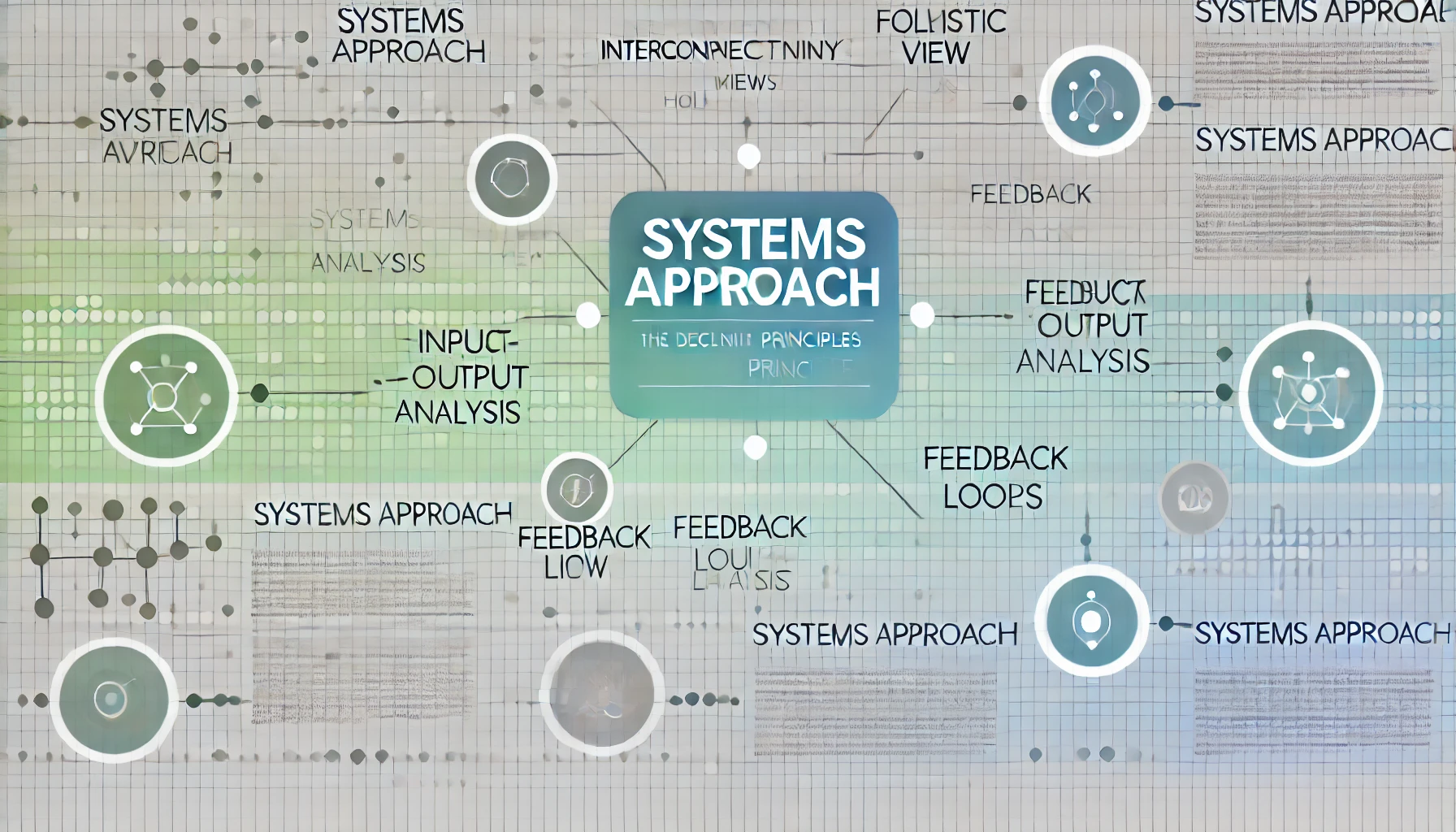
Definition and Key Principles of the System ApproachThe System Approach is a conceptual framework that emphasizes the interrelatedness of components within a system, working together to achieve a specific goal. It views an organization or process as a set of interdependent parts that interact with one another in a structured manner. The key principles of the System Approach include:
- Holistic View: The system is seen as a whole, with its parts interconnected and affecting each other.
- Goal Orientation: Systems are designed to achieve specific objectives.
- Interrelationships and Interdependencies: Elements of the system are interlinked and their interactions influence the system's overall performance.
- Feedback Mechanism: Feedback helps in adjusting the inputs and processes to meet desired outcomes effectively.
This approach is widely used in educational management to analyze and design efficient systems for teaching, learning, and administrative processes (Ackoff, 1981).
Components of a System: Inputs, Processes, Outputs, Feedback Loops
The System Approach can be broken down into four essential components:
- Inputs: The resources or factors that are introduced into the system, including information, materials, people, and time. In educational settings, inputs can be students, teachers, curricula, and technology.
- Processes: The series of activities or operations that convert inputs into outputs. In education, these are the teaching methods, learning activities, and administrative procedures.
- Outputs: The results or outcomes produced by the system. Educational outputs might include student performance, learning achievements, and administrative effectiveness.
- Feedback Loops: Information returned to the system about its performance, used to make adjustments and improvements. Feedback helps refine processes to enhance the quality of outputs and achieve the desired educational objectives.
Application of the System Approach in Educational Management
The System Approach in educational management focuses on enhancing the effectiveness and efficiency of educational institutions. It helps administrators analyze the interaction of various components like curricula, teaching methodologies, student engagement, and resource allocation. By understanding these interdependencies, institutions can develop strategies that promote better learning outcomes and more efficient use of resources (Banathy, 1991).
For example, a school can use the System Approach to identify areas where technology integration can improve teaching methods. The feedback from students and teachers regarding the effectiveness of these technological tools is then used to refine and adapt educational strategies.
Case Studies/Examples of Systems in Educational Contexts
- Learning Management Systems (LMS): An LMS like Moodle or Blackboard is a practical example of a system used in educational institutions. The inputs include course materials, student data, and learning objectives. The processes involve instructional delivery, assessment, and student engagement. The outputs are student performance metrics and course completion rates. Finally, feedback loops involve student evaluations and performance data, used to make continuous improvements to the system.
- School Administrative Systems: These systems handle the management of school operations, including attendance tracking, scheduling, and resource allocation. The feedback received from users helps to optimize the scheduling process, improve communication among staff, and ensure efficient resource use (Reigeluth, 1994).
- Holistic View: The system is seen as a whole, with its parts interconnected and affecting each other.
Study, research and present a feasibility analysis
Objective:
To explore how the system approach can be used to address specific challenges in educational management by analyzing the components and interrelationships within a system.
Instructions:
Group Formation:
- Form groups of 4-5 students.
- Each group should assign a leader to facilitate the discussion and a recorder to take notes.
2. Identify Educational Management Challenges:
- As a group, choose one specific educational management challenge to focus on. Possible challenges could include:
- Improving student performance.
- Enhancing teacher training and professional development.
- Integrating technology into the classroom.
- Resource allocation and budgeting in schools
3. Analyze the Challenge Using the System Approach:
- Break down the challenge using the components of the System Approach:
- Inputs: Identify the resources, stakeholders, and factors involved in the challenge.
- Processes: Discuss the current procedures or methods being used to address the challenge.
- Outputs: Consider the desired outcomes and how they relate to solving the problem.
- Feedback Loops: Determine how information is collected, analyzed, and used to make improvements.
4. Discuss Solutions:
- Brainstorm potential solutions that could be implemented using the System Approach.
- Evaluate how each solution might impact the different components of the system.
- Discuss the role of feedback in refining and improving the approach.
5. Prepare a Summary:
- Summarize your group's findings on a flipchart or a digital document.
- Highlight the main points of your analysis, proposed solutions, and the benefits of using the System Approach in tackling the educational challenge.
6. Present Your Findings:
- Each group will have 5 minutes to present their analysis and proposed solutions to the class.
- Focus on explaining how the System Approach helped your group understand the complexities of the challenge and guided you in finding possible solutions.
7. Class Discussion:
- After all groups have presented, engage in a class-wide discussion.
- Compare different solutions suggested by the groups and discuss their potential impact on educational management.
Assessment Criteria:
- Clarity of analysis using the components of the System Approach (inputs, processes, outputs, feedback loops).
- Creativity and feasibility of the proposed solutions.
- Participation and engagement of all group members.
- Quality of presentation and ability to communicate findings effectively.
Tips for Success:
- Be open to different perspectives and encourage all group members to contribute.
- Focus on how the System Approach helps break down complex challenges into manageable parts.
- Use specific examples to illustrate your points during the discussion and presentation
Articles

There are some research articles and studies on the System approaches and the use of digital technology in education.
"Impacts of digital technologies on education and factors influencing schools' digital capacity and transformation: A literature review" published in Education and Information Technologies. This study explores how digital technologies impact students' learning, skills, and attitudes, as well as factors that influence schools' capacity to integrate technology, such as digital competencies and school leadership (Balanskat et al., 2006; Higgins et al., 2012). You can access the article here.
"Education reform and change driven by digital technology: a bibliometric study from a global perspective" published by Nature. This study uses bibliometric analysis to examine the global trends and impact of digital technology in education, providing insights into how technology adoption influences educational systems and pedagogical practices (Chen et al., 2022). The article can be found here.
"Digital technology and practices for school improvement: innovative digital school model" from Research and Practice in Technology Enhanced Learning. This research focuses on the role of digital technology in school improvement and the development of innovative digital school models, emphasizing leadership, collaboration, and the integration of technology in educational practices (DuFour and Mattos, 2013). For more details, visit the article here.
"Educational Technology and Student Performance: A Systematic Review" from Frontiers in Psychology. This systematic review discusses the effects of digital technologies on teaching and learning practices, highlighting both the benefits and challenges in integrating technology into the educational process (Selwyn, 2011). Access the full review here.
 Objective:
To help students develop an understanding of the System Approach by identifying a real-life system within their educational institutions and analyzing its components.
Instructions:1. Identify a System:
- Select a specific system within your educational institution to analyze. Examples of systems include:
- Learning Management Systems (LMS) (e.g., Moodle, Blackboard).
- Student Information Systems (e.g., grading, attendance tracking).
- Library Management System.
- Administrative Processes (e.g., course scheduling, resource allocation).
- Learning Management Systems (LMS) (e.g., Moodle, Blackboard).
2. Analyze the System Components:
- Break down the selected system into the following components:
- Inputs: Identify all the resources, data, stakeholders, and other factors that are fed into the system.
- Processes: Describe the sequence of activities or operations that occur within the system to convert inputs into outputs.
- Outputs: Specify the results or products generated by the system (e.g., student grades, reports, learning materials).
- Feedback Loops: Explain how feedback is collected and used to refine or improve the system's processes.
3. Evaluate the System:
- Analyze how well the system functions in achieving its goals.
- Identify any challenges or inefficiencies within the system and suggest possible improvements.
- Discuss the role of feedback in enhancing the system's effectiveness.
4. Document Your Findings:
- Write a detailed report (3-5 pages) that includes the following sections:
- Introduction: Briefly introduce the system you selected and explain why it is important in your educational institution.
- Component Analysis: Present your analysis of the inputs, processes, outputs, and feedback loops in detail.
- Evaluation: Assess the system's effectiveness and suggest areas for improvement.
- Conclusion: Summarize your findings and reflect on how the System Approach helps in understanding the system's operation.
5. Submission Guidelines:
- Format your report using APA 7th edition guidelines.
- Include in-text citations and references for any sources you use.
- Submit the report as a PDF file by the deadline specified by your instructor.
Assessment Criteria:
- Identification: Clarity in identifying and selecting a relevant system for analysis.
- Component Analysis: Depth and accuracy of the analysis of inputs, processes, outputs, and feedback loops.
- Evaluation: Insightfulness in evaluating the system's effectiveness and proposing improvements.
- Presentation: Organization, coherence, and proper formatting of the report following APA 7th edition guidelines.
- Critical Thinking: Demonstration of analytical skills in examining the system from a holistic perspective.
Tips for Success:
- Choose a system that you are familiar with or have easy access to information about.
- Pay attention to how different components of the system interact with one another.
- Use specific examples and evidence to support your analysis.
- Proofread your report to ensure it meets the academic standards and APA formatting requirements.
- Select a specific system within your educational institution to analyze. Examples of systems include:
- Week 9: Analyzing and Designing Digital Technology Integration for Educational ManagementWeek 9: Analyzing and Designing Digital Technology Integration for Educational ManagementText and media areas: 3Assignments: 2Week 9: Analyzing and Designing Digital Technology Integration for Educational Management

Steps in System AnalysisSystem analysis is a crucial process in understanding the needs and designing effective systems to achieve specific goals in education. The primary steps include:
Needs Assessment: This is the first step in system analysis, where the focus is on identifying and understanding the specific needs or gaps in the current system. It involves evaluating the existing conditions, gathering information on requirements, and defining the problem that the new system or technology must address. Needs assessments help prioritize the key areas that require improvement or enhancement (Kaufman & Guerra, 2019).
Defining Goals: After identifying the needs, the next step is to set clear and measurable goals that the system should achieve. Goals should be specific, achievable, relevant, and time-bound (SMART). In educational settings, these goals might include improving student learning outcomes, enhancing teacher productivity, or increasing administrative efficiency.
Data Collection: Data collection is crucial to gather quantitative and qualitative information that supports decision-making in the system analysis. This data can include student performance metrics, teacher feedback, resource availability, and technological constraints. Accurate data collection ensures that the analysis is evidence-based and aligns with the institution's needs (Babbie, 2021).
Data Analysis: This step involves examining and interpreting the collected data to identify patterns, trends, and relationships. Data analysis helps to make informed decisions about the system's design and the best approach to meet the defined goals. It also aids in determining potential obstacles that could hinder the successful implementation of the system.
System Design ProcessThe system design process involves creating a detailed blueprint of how the new or improved system will work to meet the educational institution's needs and goals. The key steps include:
Selecting Appropriate Digital Technologies: This involves choosing the right digital tools and technologies that can effectively address the identified needs and align with the educational objectives. For instance, Learning Management Systems (LMS) like Moodle, Edmodo, or Google Classroom are commonly selected to enhance the teaching and learning experience. The selection should consider factors like user-friendliness, compatibility with existing systems, scalability, and cost-effectiveness.
Aligning Technologies with Educational Goals: It is essential to ensure that the selected technologies support the institution's broader educational goals. This alignment guarantees that digital tools enhance learning outcomes, promote student engagement, and contribute to more efficient educational management. For example, the use of AI-powered tools like adaptive learning software can personalize the learning experience for each student based on their progress and learning style (Means et al., 2014).
Case Studies of Successful Digital Technology Integration in EducationSeveral case studies demonstrate the successful integration of digital technologies in educational settings:
Flipped Classroom Model at the University of Queensland: The University of Queensland adopted the flipped classroom model using digital technologies like lecture capture and online quizzes. The inputs were the lecture videos and quizzes, processes involved student engagement through online and in-class activities, and outputs included higher student performance and active learning participation. The use of feedback loops allowed instructors to adjust their teaching strategies based on student progress and engagement (Bishop & Verleger, 2013).
AI-Based Personalized Learning in K-12 Schools: Some schools have implemented AI-powered personalized learning platforms like DreamBox Learning and Khan Academy. These platforms analyze student data to offer customized learning experiences, targeting individual students' strengths and weaknesses. The AI-driven data collection and analysis provide real-time feedback that teachers can use to refine their instructional strategies, leading to improved student outcomes (Pane et al., 2017).
Study, research and present a feasibility analysis
Objective:
To develop students' skills in system design by using digital technology to create solutions for real-world educational management challenges.
Instructions:
-
Group Formation:
- Form groups of 4-5 students.
- Assign roles within the group, such as a facilitator, recorder, researcher, designer, and presenter.
2. Identify an Educational Management Problem:
- As a group, brainstorm and select one specific problem related to educational management. Possible problems could include:
- Inefficient student performance tracking.
- Lack of effective communication between teachers, students, and parents.
- Challenges in resource allocation and budgeting.
- Low engagement in professional development for teachers.
3. Design the System Using the System Approach:
- Break down your system design into the following components:
- Inputs: Identify the resources, tools, and stakeholders that will be used in the system (e.g., digital platforms, data from student assessments, teacher feedback).
- Processes: Define the steps or methods that the system will use to process the inputs and solve the identified problem (e.g., AI algorithms for personalized learning, data analytics for decision-making).
- Outputs: Describe the expected outcomes of the system (e.g., improved student performance, streamlined communication, optimized resource use).
- Feedback Loops: Explain how the system will gather feedback to monitor its effectiveness and make continuous improvements.
4. Select the Digital Technologies:
- Choose the most appropriate digital tools and technologies that will help solve the identified problem. Consider using platforms like Learning Management Systems (LMS), AI-powered educational software, data analytics tools, or communication apps.
- Ensure that the chosen technology aligns with the educational goals of your system and enhances its effectiveness.
5. Create a Visual Representation of the System:
- Design a flowchart or diagram that visually represents your system's components, including inputs, processes, outputs, and feedback loops.
- Make sure the diagram clearly illustrates how each component interacts to solve the educational management problem.
6. Prepare a Group Presentation:
- Organize your findings and design into a 5-10 minute presentation.
- Each member should contribute to the presentation, explaining different parts of the system design and the rationale behind the chosen technologies.
- Use visual aids like flowcharts or digital slides to support your presentation.
7. Present Your System Design:
- Present your group's system design to the class.
- Focus on explaining how the digital technology integrated into your system addresses the educational management problem and contributes to achieving better outcomes.
8. Class Discussion and Feedback:
- After each group presents, engage in a class discussion.
- Provide constructive feedback to other groups, highlighting strengths and suggesting possible improvements to their system designs.
Assessment Criteria:
- Problem Identification: Clarity in identifying and defining the educational management problem.
- System Design: Creativity and feasibility of the system design using the System Approach (inputs, processes, outputs, feedback loops).
- Technology Selection: Relevance and appropriateness of the chosen digital technology in addressing the problem.
- Presentation Skills: Organization, clarity, and effectiveness of the group presentation.
- Team Collaboration: Level of participation and engagement from all group members.
Tips for Success:
- Choose a problem that is relevant and familiar to your group.
- Focus on how the digital technology enhances the effectiveness of the system.
- Use clear and concise language in your presentation to explain your ideas.
- Encourage all group members to participate in the discussion and presentation actively.
-
 Objective
To develop a comprehensive report outlining the design of a system that uses digital technology to solve an educational management problem, demonstrating its impact on improving efficiency and effectiveness.
Instructions
1. Introduction:
- Begin your report with an introduction to the educational management problem that your system aims to address.
- Clearly state the objectives of your system design and how it aligns with the needs of educational management.
2. System Design Outline:
- Provide a detailed description of your system using the System Approach:
- Inputs: Identify the resources, tools, stakeholders, and data that will be used in your system.
- Processes: Describe the specific steps or methods the system will use to transform inputs into outputs.
- Outputs: Explain the expected results or outcomes of the system and how they contribute to solving the problem.
- Feedback Loops: Discuss how your system will collect feedback to monitor and improve its effectiveness continuously.
3. Technologies Used:
- List and describe the digital technologies you have chosen to integrate into your system (e.g., AI tools, Learning Management Systems, data analytics platforms).
- Explain the role of each technology in your system and why it is suitable for solving the identified problem.
- Highlight how these technologies will enhance educational management, improve decision-making, or increase efficiency.
4. Impact on Educational Management:
- Analyze how the implementation of your system will improve educational management in your institution.
- Discuss specific benefits, such as increased student engagement, improved resource allocation, streamlined communication, or better performance tracking.
- Provide examples or scenarios demonstrating how the system will work in a real educational setting.
5. Visual Representation:
- Include a flowchart or diagram that visually represents your system's design, showing the interactions between inputs, processes, outputs, and feedback loops.
- Make sure the visual representation is clear, well-labelled, and supports your written description.
6. Conclusion:
- Summarize the key points of your system design and its potential impact on educational management.
- Reflect on the importance of using digital technology to solve educational challenges and how your system could be further improved or scaled.
7. Formatting and Submission Guidelines:
- Format your report according to APA 7th edition guidelines.
- Include in-text citations and a reference list for any sources used in your report.
- The report should be 4-6 pages long (excluding the reference list), using a standard font size and double spacing.
- Submit your report as a PDF file through the course's learning management system by the specified deadline.
Assessment Criteria:
- Clarity of Problem Definition: Ability to clearly identify and describe the educational management problem.
- System Design Quality: Detailed and well-structured analysis of inputs, processes, outputs, and feedback loops.
- Technology Integration: Appropriateness of the selected technologies and their relevance to solving the problem.
- Impact Analysis: Insightful evaluation of the system's potential impact on educational management.
- Visual Representation: Effectiveness and clarity of the flowchart or diagram in illustrating the system design.
- Report Presentation: Proper organization, grammar, and adherence to APA 7th edition formatting.
Tips for Success:
- Be thorough in explaining how each component of your system works together to address the educational problem.
- Use specific examples and evidence to support your analysis and claims.
- Pay close attention to APA formatting guidelines, including citations and references.
- Proofread your report to ensure clarity, coherence, and academic quality.
- Week 10: Developing and Implementing Digital Technology Systems for Education Quality DevelopmentWeek 10: Developing and Implementing Digital Technology Systems for Education Quality DevelopmentText and media areas: 4Assignments: 2Week 10: Developing and Implementing Digital Technology Systems for Education Quality Development

System Development: Prototyping, Testing, and Refining-
Prototyping: Prototyping involves creating an initial version or model of the system to visualize how it will function. This prototype is often a simplified representation that allows stakeholders to understand the system's features and provide feedback before full-scale development. In educational management, prototypes can include user interfaces for digital platforms, sample data workflows, or mock versions of Learning Management Systems (LMS) (Preece, Sharp, & Rogers, 2015).
-
Testing: During this phase, the prototype undergoes rigorous testing to identify any issues, bugs, or areas for improvement. Testing ensures that the system meets the defined goals and requirements and functions correctly in different scenarios. It includes both functional tests (to verify that features work as expected) and user acceptance tests (to ensure that the system is user-friendly).
-
Refining: Based on the testing phase's results, the system is refined and optimized. Adjustments are made to address any issues identified during testing, and additional features may be added based on user feedback. The refinement process continues iteratively until the system meets the desired standards and expectations, ensuring it is ready for implementation (Boehm, 1988).
Implementation Strategies: Training, Support, and Scaling-
Training: Training is a critical part of implementing a new system in educational settings. It involves preparing teachers, administrators, and students to use the new digital technology effectively. Comprehensive training ensures that all users are familiar with the system's functions and can leverage its features to improve educational management.
-
Support: Providing ongoing technical support is essential to addressing any challenges users may face with the system. This support can include troubleshooting, software updates, and addressing any user concerns. Continuous support helps maintain the system's functionality and enhance user confidence in the technology (Fullan, 2013).
-
Scaling: Once the system is successfully implemented on a small scale, the next step is to expand its use across the institution or even multiple institutions. Scaling involves adapting the system to accommodate more users, larger datasets, and increased functionality. This step ensures that the system can grow with the organization's needs and continue delivering benefits on a larger scale.
Monitoring and Evaluation of Digital Technology Systems-
Monitoring: Monitoring involves continuously tracking the performance and effectiveness of the digital technology system. This process includes gathering data on system usage, user satisfaction, and the achievement of desired educational outcomes. Effective monitoring ensures that any issues are identified early and that the system continues to operate efficiently (Heeks, 2002).
-
Evaluation: Evaluation is the systematic assessment of the system's impact on educational management. It involves analyzing both qualitative and quantitative data to determine whether the system's goals have been met. Evaluation helps in understanding the system's success, its areas of improvement, and how it can be optimized for future use.
Challenges and Opportunities in Developing Countries-
Challenges:
- Limited Infrastructure: Developing countries often face challenges related to inadequate digital infrastructure, including unreliable internet connections, lack of access to technology, and insufficient funding for digital initiatives (Unwin, 2019). These limitations can hinder the implementation and scaling of digital technology systems in education.
- Digital Literacy: There is often a lack of digital literacy among educators and students in developing regions, making it difficult to adopt and effectively use new technologies. Providing adequate training and support is crucial to overcoming this barrier.
- Funding Constraints: Financial limitations can affect the ability to invest in advanced technologies, software, and necessary training for educational institutions in developing countries.
-
Opportunities:
- Mobile Technology Adoption: The widespread use of mobile technology in many developing countries presents a unique opportunity to integrate digital learning platforms that are mobile-compatible, reaching a broader audience of students and educators (Aker & Mbiti, 2010).
- Innovative Solutions: Developing countries can leverage open-source educational tools and low-cost technology solutions to overcome infrastructure barriers. Innovations such as solar-powered devices and offline learning platforms can significantly impact regions with limited access to electricity and the Internet.
- Global Partnerships: Collaborations with international organizations, non-profits, and tech companies can help bring digital technology solutions to educational institutions in developing regions, enhancing learning opportunities and educational management.
-
Study, research and present a feasibility analysis
Objective
To give students the opportunity to present their system designs and implementation plans using digital technology to solve educational management problems, showcasing their understanding of the design and implementation process.
Instructions
1. Prepare Your Presentation:
- Each group will prepare a presentation summarizing their system design and implementation plan.
- The presentation should be 8-10 minutes long, followed by a 2-3 minute Q&A session.
- Use visual aids such as slides, diagrams, or flowcharts to illustrate your system design and implementation strategy clearly.
2. Presentation Outline:
- Introduction: Briefly introduce the educational management problem your system aims to address.
- System Design Overview:
- Inputs: Describe the resources, tools, and stakeholders involved in your system.
- Processes: Explain the steps or methods that the system uses to convert inputs into outputs.
- Outputs: Highlight the expected results or outcomes of the system.
- Feedback Loops: Discuss how your system will gather and use feedback to improve performance.
- Implementation Plan:
- Training: Outline your plan for training teachers, students, and administrators to use the system.
- Support: Describe the ongoing support mechanisms for users to ensure smooth operation.
- Scaling: Explain how the system can be expanded or scaled to other departments or institutions.
- Impact on Educational Management: Discuss how your system design and implementation will improve educational management, enhance decision-making, or increase efficiency.
3. Practice as a Group:
- Practice your presentation as a group to ensure that it flows well and that all members are familiar with their parts.
- Make sure each group member has a speaking role and contributes to the presentation.
4. Present to the Class:
- During your presentation, be clear and concise in explaining your system design and implementation plan.
- Use visual aids to make complex concepts easier to understand.
- Engage with the audience by encouraging questions and addressing them confidently during the Q&A session.
5. Class Feedback:
- After each presentation, other groups and the instructor will provide constructive feedback.
- Listen to the feedback and note areas where your system design and implementation plan could be improved.
6. Evaluation Criteria:
- Clarity of Presentation: How clearly the system design and implementation plan were explained.
- Visual Aids: The effectiveness and clarity of diagrams, slides, and other visual tools.
- Team Collaboration: Equal participation of all group members in the presentation.
- Implementation Plan Quality: The feasibility and thoroughness of the training, support, and scaling strategies.
- Engagement: Ability to respond to questions and engage the audience during the Q&A session.
Tips for Success:
- Be well-prepared and organized to ensure a smooth presentation.
- Practice as a group to manage the time effectively and make sure everyone understands their role.
- Use simple language to explain technical details and make your presentation accessible to everyone.
- Stay open to feedback and think of it as an opportunity to improve your system design.
 Objective
To critically analyze how your system design improves education quality and addresses the challenges and changes in 21st-century education.
Instructions
1. Introduction:
- Begin your paper with a clear introduction to your system design.
- Briefly summarize the educational management problem it aims to solve and how it aligns with the needs of 21st-century education.
2. System Overview:
- Provide a detailed description of your system's components:
- Inputs: Outline the resources, tools, and stakeholders involved.
- Processes: Explain the steps or methods used to convert inputs into desired outputs.
- Outputs: Describe the expected results and how they contribute to solving the educational management problem.
- Feedback Loops: Highlight how your system gathers feedback to monitor and improve its effectiveness.
3. Impact Analysis on Education Quality:
- Analyze how your system design positively impacts the quality of education.
- Discuss specific ways in which the system improves learning outcomes, enhances teaching methods, or optimizes school management.
- Include examples or data that demonstrate the effectiveness of the system in achieving better educational outcomes.
4. Addressing 21st-Century Changes in Education:
- Examine how your system design aligns with the trends and changes in 21st-century education, such as:
- Integration of digital technology and innovative learning tools.
- The need for personalized and adaptive learning experiences.
- Enhancing digital literacy and preparing students for future skills.
- Discuss how the system promotes collaboration, critical thinking, and problem-solving skills, which are essential in today's educational landscape.
5. Challenges and Solutions:
- Identify any challenges or limitations in implementing your system in educational settings.
- Suggest strategies to overcome these challenges and ensure the successful adoption and scalability of your system.
6. Conclusion:
- Summarize the key points of your analysis and reflect on the significance of using digital technology to improve education quality.
- Discuss the potential future developments for your system design and its long-term impact on educational institutions.
7. Formatting and Submission Guidelines:
- Format your paper using APA 7th edition guidelines, including in-text citations and a reference list for all sources used.
- The final paper should be 5-7 pages long (excluding the reference list), using a standard font size and double-spacing.
- Submit your paper as a PDF file through the course's learning management system by the specified deadline.
Assessment Criteria:
- Analysis of System Design: Depth and clarity of analysis regarding how the system components contribute to educational quality.
- Alignment with 21st-Century Education: Insight into how the system addresses modern educational needs and challenges.
- Evidence and Examples: Use of relevant data, case studies, or examples to support your analysis.
- Critical Thinking: Ability to identify challenges, propose solutions, and think critically about the impact of your system.
- Presentation and Writing Quality: Organization, coherence, grammar, and adherence to APA 7th edition formatting.
Tips for Success:
- Use specific examples and evidence to support your claims about the system's impact on education quality.
- Pay attention to APA formatting, including in-text citations and references, to ensure academic standards are met.
- Proofread your paper to eliminate errors and ensure clarity and coherence.
- Reflect on how your system contributes to the broader goals of education in the 21st century.
- Week 11: Introduction to Big DataWeek 11: Introduction to Big DataText and media areas: 4Week 11: Introduction to Big Data
- Definition of Big Data:
Basic Concepts of Big Data
Big Data refers to the large volumes of data generated at high velocity from a variety of sources that require advanced tools for processing and analysis. The concept of Big Data is often described through the "5 Vs":
- Volume: The amount of data generated is enormous, ranging from terabytes to petabytes. For example, educational institutions collect vast amounts of data on student performance, attendance, and engagement (Marr, 2015).
- Velocity: Data is generated at an unprecedented speed, requiring real-time or near-real-time processing. In education, this could involve tracking student interactions with online learning platforms (Kitchin, 2014).
- Variety: Big Data comes in multiple formats—structured, semi-structured, and unstructured data. Educational data might include text, video, audio, social media posts, and log files from learning management systems (Gandomi & Haider, 2015).
- Veracity: The quality and accuracy of data can vary, necessitating methods to ensure data integrity. In education, data veracity is crucial for making reliable decisions based on student assessments (Kaisler et al., 2013).
- Value: The ultimate goal of Big Data is to derive meaningful insights that add value to decision-making processes. For educational administrators, this could mean identifying patterns that lead to improved student outcomes (Manyika et al., 2011).
- Week 12: The Future of Big Data in EducationWeek 12: The Future of Big Data in EducationText and media areas: 2Week 12: The Future of Big Data in Education
- Week 13: Preparation and use of big data in the development of human resources, organizations and societyWeek 13: Preparation and use of big data in the development of human resources, organizations and societyText and media areas: 3Week 13: Preparation and use of big data in the development of human resources, organizations and society
- Week 14-15: Presentation: The concept of innovation and managementWeek 14-15: Presentation: The concept of innovation and managementWeek 14-15: Presentation: The concept of innovation and management
- Final TestFinal TestQuiz: 1Final Test
- Opened: Sunday, 24 August 2025, 3:29 PMClosed: Sunday, 31 August 2025, 11:59 PM
Final Test: Demonstrate Your Mastery
This final assessment challenges you to synthesise and apply the core concepts of Innovation, Digital Technology, and Educational Administration. It is designed to evaluate your comprehensive understanding and ability to formulate integrated solutions for contemporary educational challenges.
Success in this test signifies your readiness to lead and implement transformative changes within educational contexts.